Duggan Academy's Early College Launch with AIC
A Transformative Summer for Springfield Education: SEZP Progress and Duggan Academy's Early College Launch with AIC
SPRINGFIELD, MA — July 2025
For over a decade, the Springfield Empowerment Zone Partnership (SEZP) has worked hand in hand with educators, families, and the broader community to drive meaningful and lasting change in the city’s schools. Today, that partnership is yielding real, measurable outcomes—and a bold new chapter is beginning.
A Decade of Progress
Currently serving more than 80% of Springfield’s middle school-aged students, SEZP’s impact is most clearly seen in rising high school graduation rates across the city. Students are entering high school more prepared than ever before, and the Zone’s efforts are reaching a critical turning point: several SEZP schools are preparing to reintegrate with the Springfield Public Schools district, a transition made possible by years of sustained academic and operational improvement.
This reintegration is historic. Since 2017, only six schools serving grades 6–12 in Massachusetts have exited underperforming status. Remarkably, four of those are SEZP schools—including the highest-improving school in the entire state. These results reflect not just strong outcomes but a model of what is possible through collaborative leadership and a relentless focus on student success.
Looking Ahead: Middle School Redesign
Still, SEZP and the broader community acknowledge that there is work still to be done. In alignment with Superintendent Dinnall’s vision to transform the middle school experience across Springfield, a new citywide redesign initiative was launched this spring. Beginning with a comprehensive community survey, the goal is to reimagine middle schools to better meet students' developmental, academic, and social needs. The redesign effort is an open call to families, educators, and students to share their voices and help shape the next generation of middle school learning.
A New Era at Duggan Academy: Early College for All
As Springfield looks to the future, an exciting new initiative at Duggan Academy is poised to redefine the high school experience. This fall, Duggan Academy will become the launch site for a new Early College program in partnership with American International College (AIC), recently designated by the state’s joint Early College Committee. This designation, one of just eighteen statewide and the only one awarded to a private college west of Worcester, is a milestone for the region.
Beginning in Fall 2025, Duggan will adopt a wall-to-wall Early College model meaning every student will participate, regardless of prior academic performance. Through this model, students will have the opportunity to earn up to 60 college credits at no cost before graduating high school. The program will focus on high-demand career fields such as health sciences, education, and criminal justice, and offer MassTransfer-eligible courses to ease students’ transition to college.
The initiative is part of Massachusetts’ Reimagining High School effort and is specifically designed to close opportunity gaps and expand postsecondary access for historically underrepresented students.
Personalized, Inclusive, and Future-Focused
Key features of the program include:
Personalized academic coaching and support within small cohorts
Dedicated advising for multilingual learners and students with exceptional needs
Instruction grounded in culturally responsive teaching
Skill-building in executive functioning and college readiness
Universal participation for all Duggan students
This initiative builds upon an already strong partnership between Duggan and AIC. In previous years, Duggan students have successfully earned college credits through AIC, often with strong pass rates and increased college matriculation. The new Early College designation marks a significant expansion of that success.
“We’re proud to partner with Duggan Academy and the Springfield Empowerment Zone on this Early College initiative,” said Michael Dodge, executive vice president for academic affairs and student life at AIC. “This designation reflects our shared belief that all students deserve opportunities to succeed. Early College is about more than earning credits—it’s about building the skills, confidence, and support networks students need for college and life.”
Governor Maura Healey echoed these sentiments, calling Early College "an important and effective tool for making higher education more accessible and affordable."
The initiative also aligns with regional workforce development goals outlined in the Pioneer Valley Labor Market Blueprint and reinforces AIC’s deep commitment to educational equity and community engagement.
A City on the Rise
As Springfield enters this pivotal moment—with middle school redesign underway and groundbreaking high school opportunities on the horizon—the city is modeling what educational transformation looks like at scale.
From a decade of turnaround progress to a future rooted in college and career readiness for all, Springfield is proving what’s possible when communities invest in their students, work together, and keep pushing forward.
As the summer begins, SEZP and its partners are committed to listening, learning, and leading with a shared vision: schools where every student is prepared for a successful, opportunity-filled future.
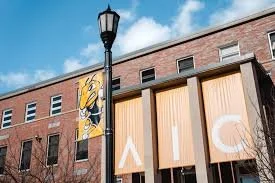
Launching Fall 2025: Duggan Academy will implement a wall-to-wall Early College model in partnership with American International College (AIC), making it available to all students.
Earn Up to 60 Credits: Students can graduate with up to 60 college credits—at no cost—focused on high-demand fields like health sciences, education, and criminal justice.
No Barriers to Entry: The program is open to every Duggan student, regardless of prior academic performance, ensuring equitable access to college-level learning.
Holistic Student Support: Includes academic coaching, executive functioning skill-building, and dedicated support for multilingual and exceptional learners.
State-Recognized Program: Designated by the Commonwealth of Massachusetts, AIC is the only private college west of Worcester selected to lead a new Early College site.
Criminal Justice Track
The Criminal Justice track allows you to explore how laws, courts, and law enforcement shape everyday life. It’s a pathway for students curious about fairness, responsibility, and the systems that keep communities safe.
What You’ll Study:
Freshman & Sophomore Years: You’ll build strong reading and writing skills in English Composition and Analytical Writing. You’ll take psychology to understand human behavior and political science to explore how laws are created.
Junior Year: You’ll take Introduction to Criminal Justice, your first step into the field, where you’ll learn about courts, policing, and corrections. Courses like Spanish and biology expand your perspective on diverse communities and the scientific side of justice.
Senior Year: You’ll take advanced AIC classes like Law Enforcement and Statistics, giving you insight into both real-world police work and the data used to study crime and justice.
Skills You’ll Gain:
Critical thinking about fairness and equity
Strong writing and communication
Understanding of human behavior and social systems
Problem-solving and decision-making
Future Pathways: This track prepares you for further study in criminal justice, law, social work, or public policy. Careers might include police officer, lawyer, corrections officer, social worker, or policy analyst.
Questions to Ask Yourself:
Am I curious about how justice systems work and how they can improve?
Do I want to help make communities safer and fairer?
Can I picture myself in a role where I serve the public and protect the rights of others?
Allied Health Track
The Allied Health track is designed for students who love science and want to explore careers in healthcare. It’s a pathway for those interested in helping people, improving health, and understanding how the body works.
What You’ll Study:
Freshman & Sophomore Years: You’ll strengthen your reading and writing in English Composition, then add psychology to learn how people think and behave. You’ll also start public health, which introduces how health connects to communities.
Junior Year: You’ll dive into science through Anatomy & Physiology I and II. These lab-based courses give you a strong foundation in understanding the body. You’ll also study statistics — a tool used in health and medicine to make sense of data.
Senior Year: You’ll take Spanish for Healthcare Professionals this AIC course is to prepare you to work with patients from diverse backgrounds and How Our Healthcare System Works to understand hospitals, insurance, and care networks.
Skills You’ll Gain:
Scientific knowledge about the human body
Communication skills for working with patients and families
Ability to analyze data and think critically
Cultural awareness in healthcare
Future Pathways: This track is a starting point for nursing, physical therapy, occupational therapy, public health, or other health science fields. Careers might include nurse, public health worker, EMT, healthcare administrator, or lab technician.
Questions to Ask Yourself:
Do I enjoy biology, anatomy, and other science classes?
Do I want to help people get healthier and support my community?
Can I imagine myself working in a hospital, clinic, or public health organization?
Education Track
The Education track prepares you to inspire others and make a difference in schools and communities. It’s a pathway for students who are patient, creative, and interested in guiding children and young adults.
What You’ll Study:
Freshman & Sophomore Years: You’ll begin with English Composition and psychology to strengthen your communication and understanding of people. You’ll also study sociology to see how culture, family, and community affect education.
Junior Year: You’ll take Foundations of Education, an introduction to teaching as a profession. You’ll also study Social-Emotional Learning, which shows how to support students’ emotional and mental well-being in schools.
Senior Year: You’ll study Child Growth and Development and biology, connecting science and social science to how students learn and grow. Your AIC courses will give you an inside look at the challenges and rewards of working in education.
Skills You’ll Gain:
Communication and leadership
Understanding of child and adolescent development
Ability to support social-emotional needs of learners
Cultural awareness and sensitivity
Future Pathways: This track is a launchpad for careers in teaching, school counseling, child development, or community education. It can also prepare you for leadership roles in schools or youth programs.
Questions to Ask Yourself:
Do I enjoy helping others learn and succeed?
Am I patient, creative, and curious about how children grow and develop?
Can I picture myself teaching, mentoring, or supporting students in a school or community program?